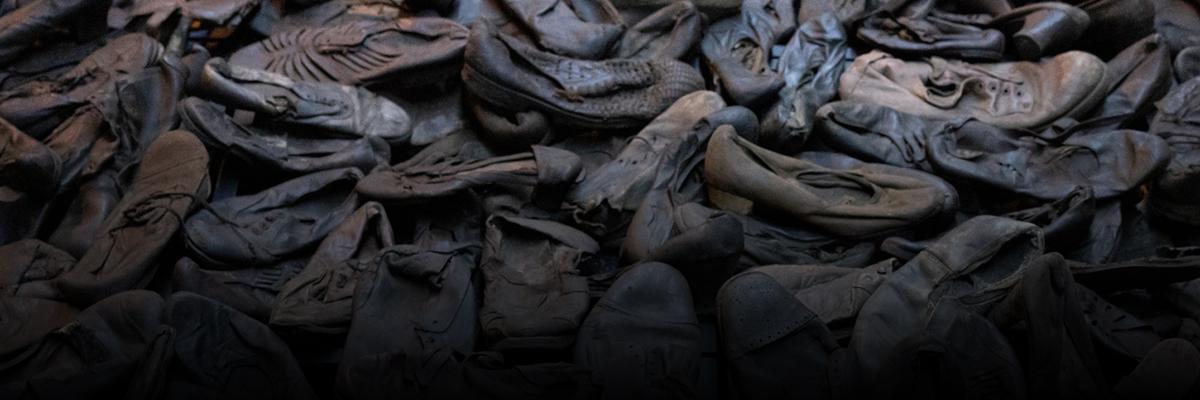
PRESERVING THE SHOES LEFT BEHIND
For over 30 years, the Museum has displayed victims’ shoes recovered from Nazi killing centers and camps—anonymous yet haunting proof of the Holocaust’s vast scale and horror. Originally on loan from the State Museum at Majdanek in Poland, they were returned in 2023. The following year, 4,000 shoes joined our permanent collection. Follow their journey to the Museum.
The Journey to the Museum Begins
In 2024, the Museum’s chief conservator traveled to Poland, where he worked with the State Museum at Majdanek to prepare and pack the shoes for their journey to the Museum. Each shoe was recorded with a unique number, placed in a numbered box, and packed in a large wooden crate bound for the Museum’s David and Fela Shapell Family Collections, Conservation and Research Center.
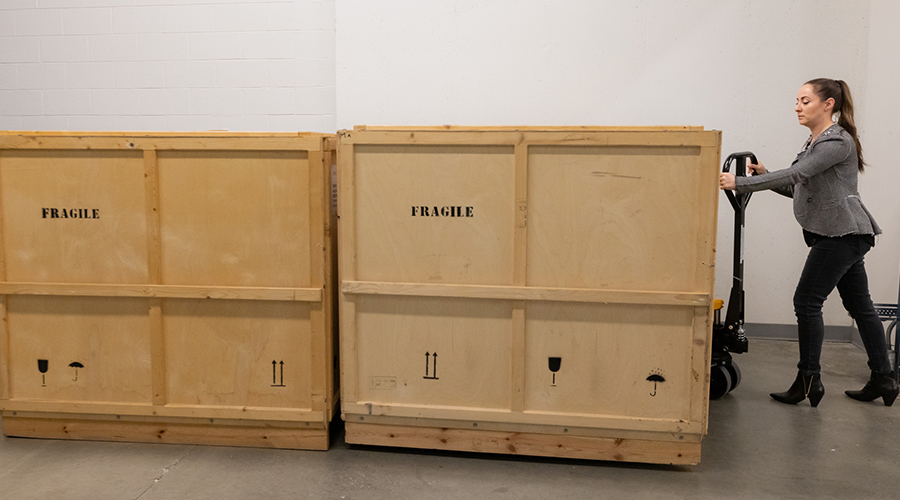
Welcomed with Care
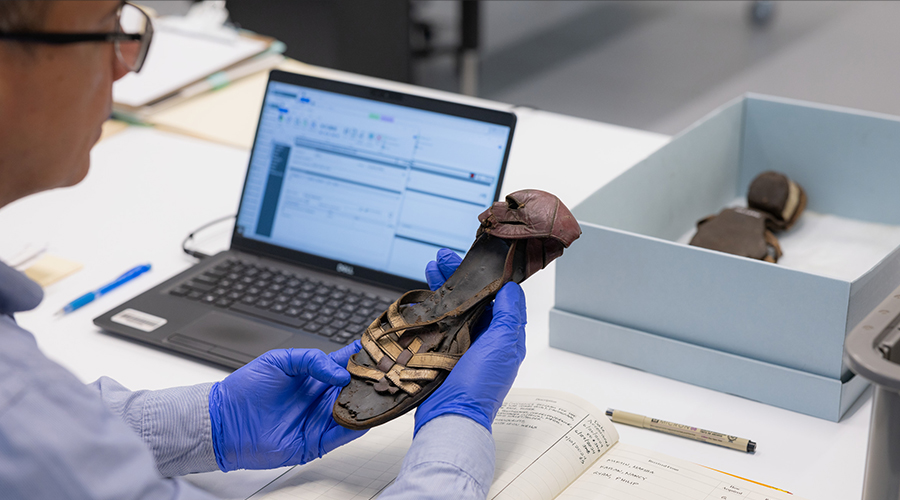
Upon arrival at the Shapell Center, the Museum’s Collections Services team meticulously inventoried and sorted 4,000 shoes worn by Holocaust victims who were imprisoned and likely killed in the Majdanek, Sobibor, and Belzec camps. Seeing the shoes up close is deeply affecting—each one a searing echo of a life cut short.
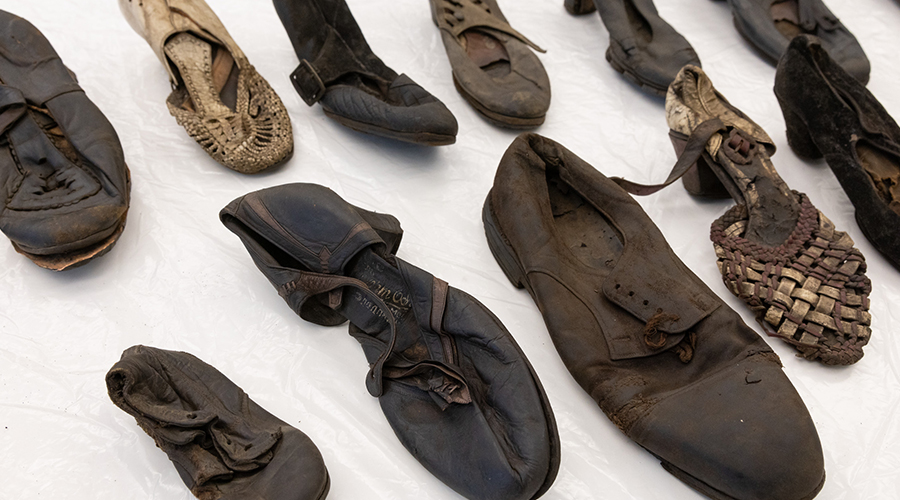
Every Shoe Cleaned by Hand
All of the victims’ shoes in our care are gently brushed and surface-cleaned, while retaining the wear and markings that make each one a unique piece of history. The 4,000 shoes that became part of our collection in 2024 were carefully inspected at the Shapell Center upon their return.
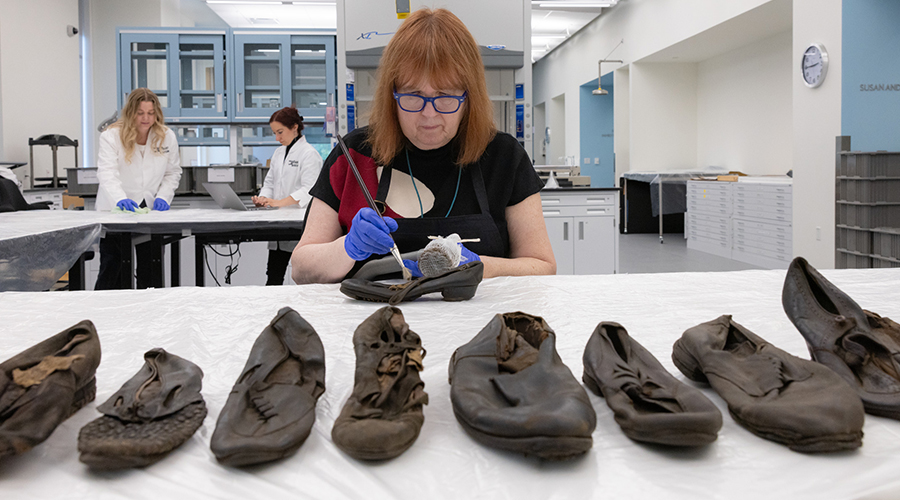
Officially Added to Our Collection
The Museum’s collections registrar officially accessioned (or added) each shoe to the Museum’s permanent collection—ensuring its preservation for generations to come.
Delivered for Display
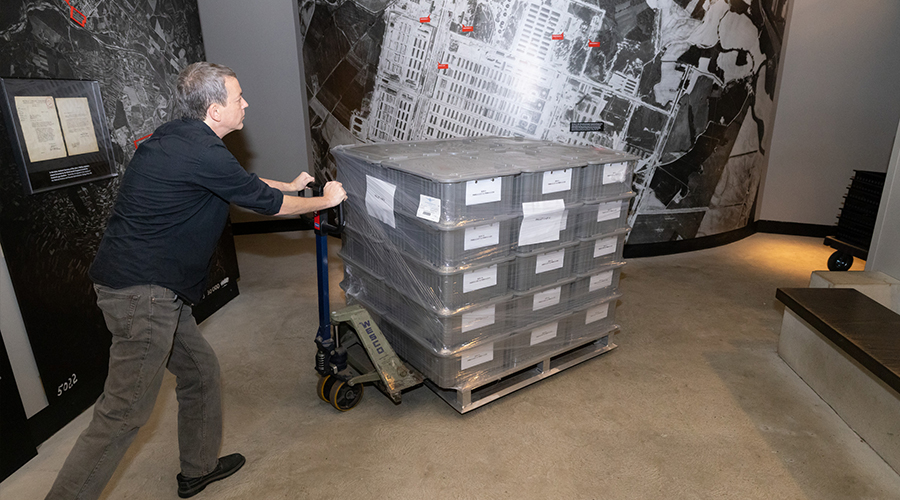
After inventory and careful sorting, the shoes were packed in protective totes, secured on pallets, and shrink-wrapped for transport—most to the Museum building for display, and some to storage, ready to rotate into future displays.
Arranged with Intention
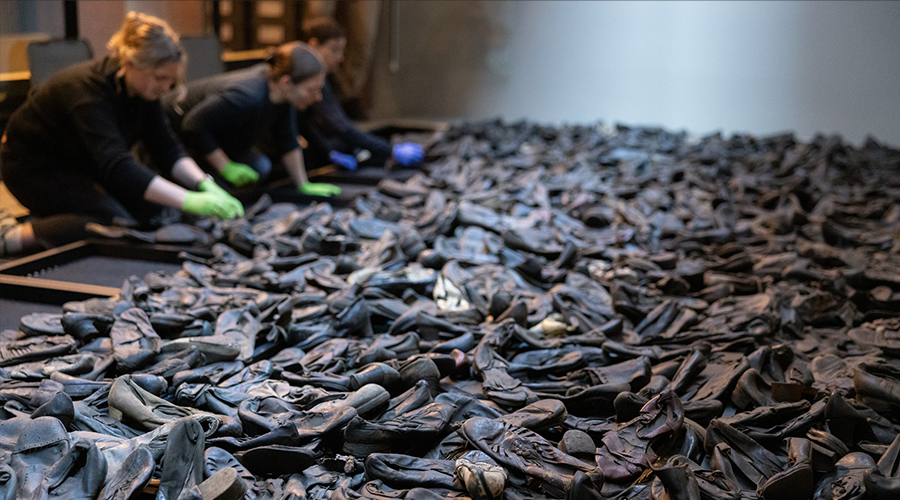
After arriving at the Museum building, each shoe was tagged, mapped, and placed in its assigned location in the main exhibition. The team arranged a diverse array of shoes—working from the back of the exhibit toward the visitor path—to reflect the individuality and humanity of those who once wore them.
Remembered with Reverence
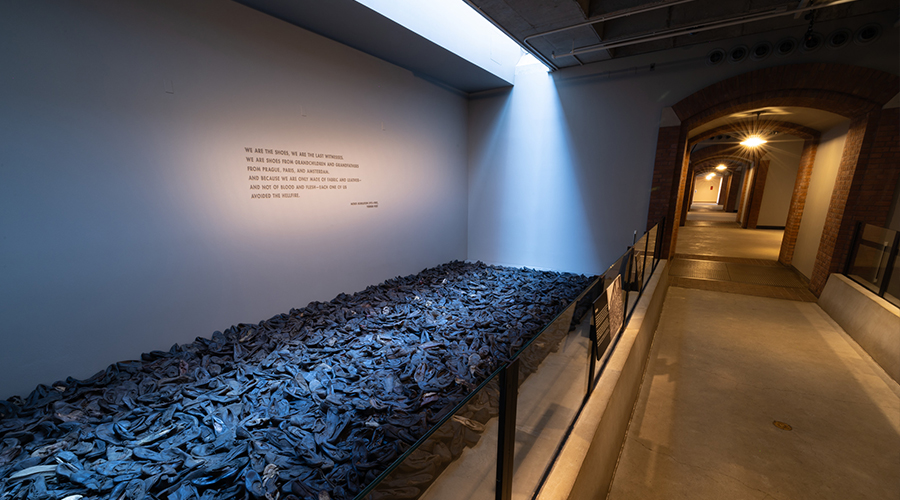
Visitors often pause when they see the shoes, moved by the profound impact of this quiet display. Now a permanent part of the Museum’s collection—a gift of the State Museum at Majdanek in Poland—the shoes stand as enduring evidence of the Holocaust, forever honoring the countless lives they represent.
Your Support Makes Our Work Possible
Every day, the Museum preserves Holocaust evidence and confronts rising antisemitism and hate. Your contribution will have an immediate and direct impact on our urgent mission.
MAKE A GIFT TODAY